Safety and size basics
How to read toy safety labels and warnings
Toy packaging is covered in small symbols and printed warnings. Many parents glance past them, but they carry some of the most useful information on the box. Knowing what they mean helps you choose toys that are safe for the child you are buying for, and use them the right way.
This guide explains the most common labels and warnings, and what to check when you are buying online and cannot see the box.
The age label
Most toys show a recommended age, such as 0+, 18m+, 3+ or 8+. This is the youngest age the maker considers suitable. It reflects both safety, such as small parts, and the skills a child needs to enjoy the toy.
Treat the age label as a minimum. A toy marked 3+ is not suitable for a two year old, even if the child seems advanced for their age. On Tumbletot, the age range sits near the top of every product page.
The small parts warning
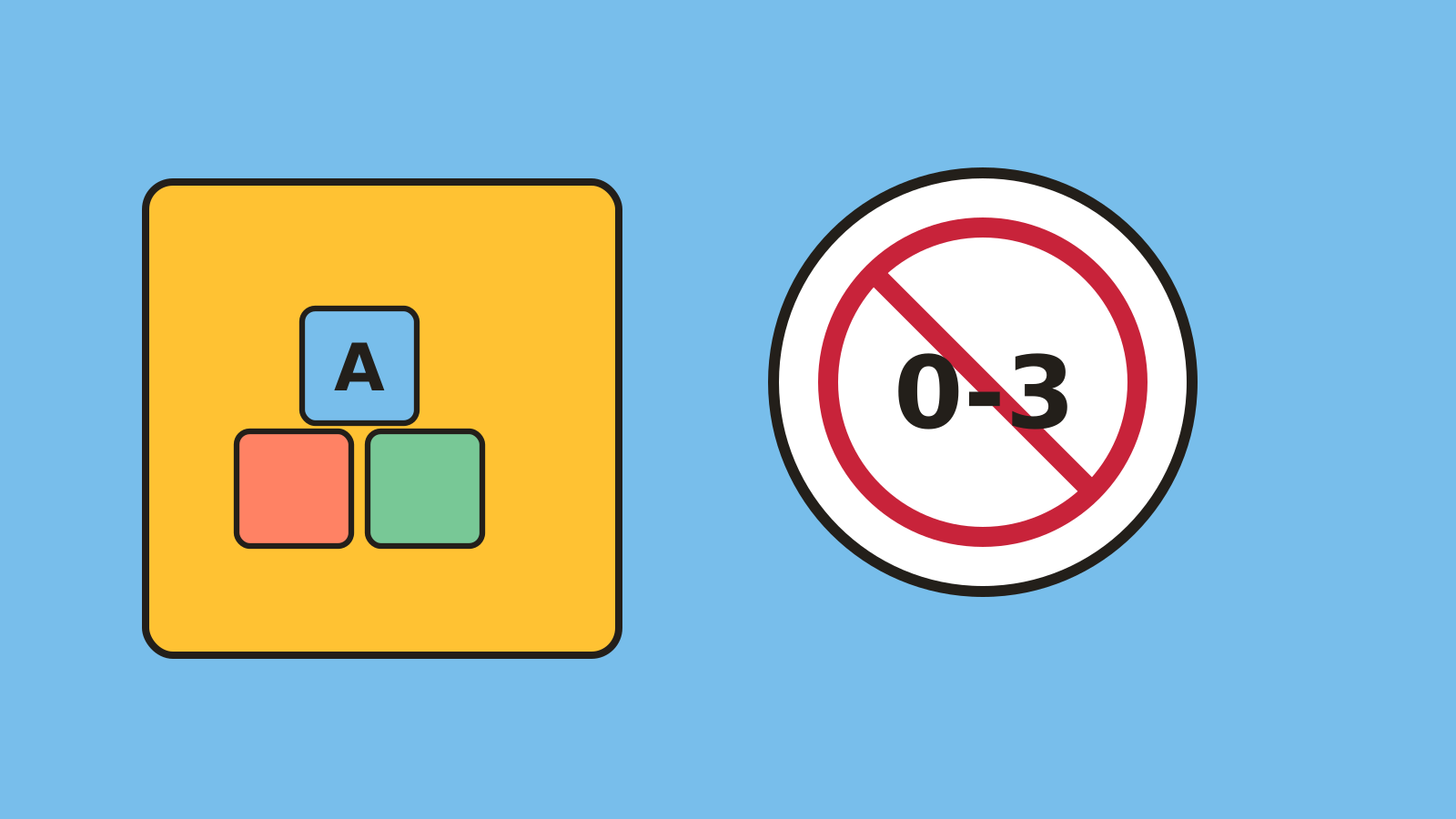
One of the most important symbols is a circle with a crossed out baby face and the numbers 0 to 3. It means the toy is not suitable for children under 36 months because it contains small parts that could be a choking hazard.
In some countries you will see a written warning instead, often beginning with the word WARNING and mentioning a choking hazard and small parts. Either way, the meaning is the same: keep the toy away from babies and toddlers.
If you have children of different ages, this warning is especially important. Toys meant for older siblings can be a risk for younger ones.
Safety marks
Toys sold in many regions carry marks showing that the maker states they meet local toy safety requirements. These marks vary by region. They are a useful sign, but they are not a guarantee, and we do not test products ourselves. Look for them on the listing, and buy from retailers that show clear safety information.
Battery warnings
Many electronic toys use batteries. Button batteries, the small coin shaped ones, are particularly dangerous if swallowed. Look for:
- A battery compartment that is closed with a screw, not just a clip.
- Clear information on which batteries are needed and whether they are included.
- Warnings about keeping spare batteries away from children.
Store spare button batteries out of reach, and dispose of used ones safely.
Magnet warnings
Some building sets and games contain strong magnets. If a child swallows more than one, the magnets can attract each other inside the body and cause serious harm. Toys with loose magnets usually carry a warning and an age label for older children. Keep them away from younger children and check for any loose pieces regularly.
Cords, strings and straps
Toys and baby products with long cords, ribbons or straps can be a risk for babies and toddlers. Look for warnings about cords, and remove any extra strings or ties before giving a toy to a young child. For baby products such as mobiles and play gyms, follow the instructions on when to remove them, often when a baby can push up on hands and knees.
Materials and finishes
The material line on a product page tells you what a toy is made of. Wooden toys are often finished with paint or oil, and many makers state that they use child safe finishes. Plastic toys may list the type of plastic. Soft toys list their fabric and filling. If a detail is "Not confirmed" on Tumbletot, check the retailer listing or contact the maker.
Washing and cleaning
Many labels include cleaning instructions. Soft toys may be machine washable, surface wash only, or not washable at all. Bath toys may need to be dried thoroughly to prevent mold. Following these instructions keeps toys hygienic and in good condition.
Assembly instructions
Larger toys and baby equipment, such as play kitchens, ride on toys and high chairs, come with assembly instructions. Follow them exactly, use all the parts provided, and check screws and fixings regularly. Keep the instructions somewhere safe.
What to keep
Keep the packaging, instructions and receipt for any toy with batteries, electronics or assembly. They are useful if you need to check a warning later, contact the maker or arrange a return. Some makers also offer product registration, which means they can contact you if there is ever a safety recall.
Buying online
When you cannot see the box, the retailer listing is where to find this information. Before ordering, check:
- The age label and any small parts warning.
- Battery type, compartment and whether batteries are included.
- Any magnet, cord or balloon warnings.
- Materials and cleaning instructions.
- Safety marks for your region.
Recalls
Occasionally a maker finds a problem with a toy after it has been sold and issues a recall. Registering products and keeping receipts makes it easier to be contacted. If you hear about a recall for a toy you own, stop using it and follow the maker's instructions.
Supervision still matters
Labels are a guide, not a replacement for supervision. Young children should be watched during play, especially with new toys, and toys should be checked regularly for damage. Remove any toy that is broken, has loose parts or sharp edges.
Our guide to choosing toys by age suggests toys that suit each stage, and you can compare toys by age range in Toys & Games and Educational & STEM. A few seconds spent reading the label is one of the simplest ways to keep play safe and fun.